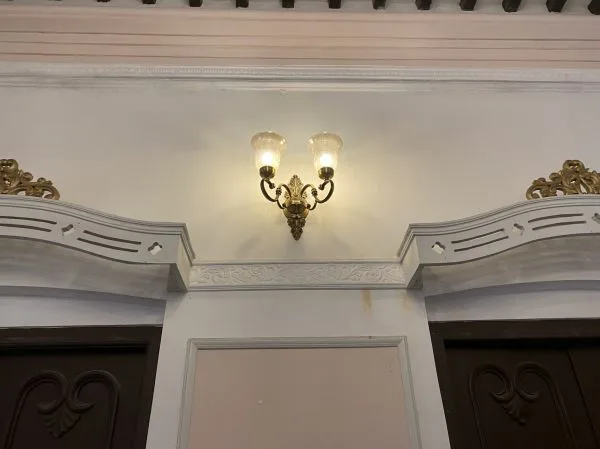
Wall Sconce Power Sources: Wiring and Battery Options
Learn how wall sconces get power: hardwired connections to a junction box, plug-in cords, and battery-operated or rechargeable wall lights, and what each option requires.

Contents
- Hardwired sconces need a junction box
- Plug-in cords skip the wall work
- Battery sconces light walls without outlets
- Questions About Sconce Power Sources
- Are there battery operated wall sconces?
- Do wall sconces need wiring?
- What does a hardwired wall sconce need behind the wall?
- Can a rechargeable battery sconce replace a wired light?
A wall sconce can draw power from a hardwired connection to a junction box, a plug-in cord, or an onboard battery, so whether wall sconces need wiring depends on which type you choose. This page explains each power source and the installation each one asks of you. It also covers how remote-controlled wall lights and rechargeable battery sconces change what a corner can hold.
Hardwired sconces need a junction box
A hardwired wall sconce connects to the electrical circuit of the home through a junction box set into the wall. That box gives the fixture a fixed supply and a secure mount, and the wiring is hidden inside the wall. Installing one means running cable to the spot and making the connections, which calls for a qualified electrician where the work touches the circuit. A hardwired sconce cannot be moved later without opening the wall again.
Plug-in cords skip the wall work
A plug-in cord sconce draws power from a wall outlet and needs no junction box or cable inside the wall. The cord reaches the nearest outlet and stays visible, so plan a route that suits the room and keeps the cord out of walkways. These fixtures suit a renter or anyone who wants a sconce without electrician installation. The placement is limited by where an outlet sits and by the length of the cord.
Battery sconces light walls without outlets
A battery-operated wall light carries its own power, so it needs no wiring and no outlet. A rechargeable battery sconce is taken down or plugged into a charger when its cell runs low, while a remote-controlled wall light lets you switch it from across the room. Battery sconces suit a spot where cable cannot go, such as a narrow corner or a rented wall. Check how the cell is charged and how the fixture is fixed to the wall before you buy.
Questions About Sconce Power Sources
Are there battery operated wall sconces?
Yes, battery-operated wall sconces exist and they carry their own power cell inside the fixture. They need no wiring or outlet, which makes them a fit for a wall where cable cannot run. A rechargeable battery sconce is charged again after the cell drains, while some models run on replaceable batteries. Check the charging method and the mount before you choose one.
Do wall sconces need wiring?
Wall sconces need wiring only when the fixture is hardwired to the electrical circuit. A plug-in cord sconce uses an outlet instead, and a battery-operated wall light needs neither wire nor outlet. The power source decides the installation, so pick the type that matches the wall you have. Where circuit work is needed, a qualified electrician should do it.
What does a hardwired wall sconce need behind the wall?
A hardwired wall sconce needs a junction box set into the wall and cable run to it from the circuit. The box holds the connections and supports the fixture on the wall. Running that cable and joining it to the circuit is a job for a qualified electrician. Plan the spot before the wall is finished, because changing it later means opening the wall.
Can a rechargeable battery sconce replace a wired light?
A rechargeable battery sconce can stand in for a wired light where the output suits the room and no fixed supply is needed. It mounts on the wall without a junction box, so it fits a corner where cable cannot go. The trade is that you remove or plug in the cell to charge it. Check the light output and the mount before you rely on it as the only light in a spot.