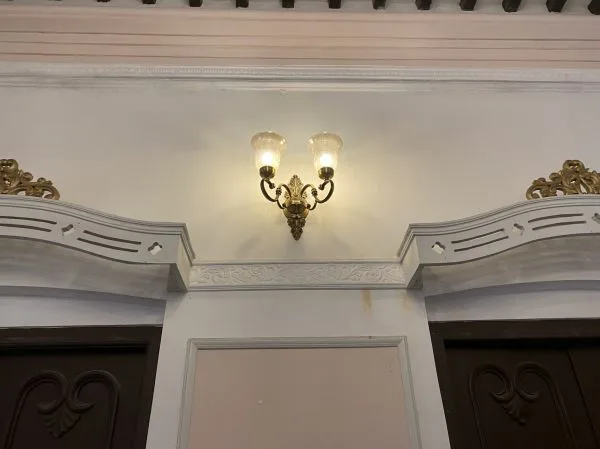
Types of Wall Sconces
Learn the types of wall sconces by light direction, power source and style. See how uplight, downlight, swing-arm and plug-in sconces fit a room.
Contents
- Light direction defines the sconce type
- Hardwired versus plug-in wall sconces
- Swing-arm sconces for reading spots
- Space age style wall sconce design
- Match sconce styles to the room
- Mounting height depends on the room
- Plan the sconce layout before buying
- Safety and installation basics
- Wall sconce questions readers ask
- What are the main types of wall sconces?
- What is the difference between an uplight and a downlight sconce?
- Should I choose a hardwired or a plug-in sconce?
- At what height should wall sconces be mounted?
- What is a space age style wall sconce?
- Can I install a wall sconce myself?
Types of wall sconces divide by where the light goes, how the fixture gets power and what design style it follows. A downlight sconce washes light toward the floor, while an uplight sconce throws it toward the ceiling. Choosing the type comes down to the wall you have and the job the light should do.
- Pick the light direction first: downlight for tasks below the fixture, uplight for ambience above it.
- Decide between a hardwired sconce and a plug-in sconce before you buy, based on whether the wall has a junction box.
- A swing-arm wall sconce suits reading beside a bed or chair because the arm moves the light where you need it.
- Mounting height depends on the fixture, the room and what sits below it, so measure before drilling.
- Style should follow the room: space age style wall sconce designs read as sculptural, while simple shades recede.
Light direction defines the sconce type
Wall sconce types begin with direction, because the path of the light shapes how a corner feels. A downlight sconce sends light downward and gives a pool of brightness under the fixture. An uplight sconce aims light at the ceiling and spreads a softer glow across the upper wall.
Direction also sets what the fixture can do beside furniture. Downlight suits a spot where someone reads, writes or needs to see a step. Uplight works where the wall above a sofa or console should glow without throwing glare at eye level.
Some fixtures combine both directions with a shade that is open at the top and bottom. A combined sconce lights the ceiling and the surface below at the same time. Check which way the socket faces before you commit to a spot.
- Downlight sconce: light falls toward the floor
- Uplight sconce: light rises toward the ceiling
- Combined sconce: open shade sends light both ways
- Adjustable head: the direction can be changed after mounting
Hardwired versus plug-in wall sconces
A hardwired sconce connects to the electrical wiring inside the wall and needs a junction box at the mounting point. A plug-in sconce ends in a cord that reaches a nearby outlet, so no wiring work is needed. The choice depends on what the wall already contains.
Hardwired sconces sit flush against the wall and hide their cord, which keeps a hallway or bathroom clean. Installing one requires an electrician where wiring is absent or the circuit must change. Treat any new wiring as a job for a trained specialist.
Plug-in sconces let you add light to a rental or a wall without power. The cord shows unless you route it along trim or behind furniture. Plan the cord path and the outlet location before you pick a mounting spot.
Swing-arm sconces for reading spots
A swing-arm wall sconce has a jointed arm that moves the shade toward or away from the wall. The arm lets one fixture serve a bed, a chair or a desk without a floor lamp. Readers gain light exactly where the page sits.
Swing-arm sconces work well on either side of a bed in place of table lamps. The arm folds back when the light is not in use, which frees the nightstand surface. Mount the base low enough that the arm clears the headboard and pillows.
The reach of the arm matters more than the size of the shade. Measure the distance from the wall to the seat or mattress before you choose. A short arm cannot reach a deep chair, and a long arm can crowd a narrow space.
Space age style wall sconce design
A space age style wall sconce draws on rounded shapes, chrome or glossy finishes and a sculptural look. The fixture reads as an object on the wall even when the light is off. This style suits rooms that already use curved furniture and bold materials.
Space age designs often use globes, discs or stacked spheres that throw light in several directions at once. The light tends to be soft and ambient rather than focused for tasks. Place space age sconces where the glow can wash a wall rather than light a work surface.
Sconce design styles range from plain fabric shades to bare sculptural forms, and each sets a different mood. Match the level of detail to the rest of the room so the wall does not compete with the furniture. A single bold sconce can act as the focal point of a plain corner.
Match sconce styles to the room
Sconce styles fall into a few broad families: shaded, bare bulb, lantern, globe and sculptural. A shaded sconce softens the light and hides the bulb. A bare bulb design shows the light source and gives a raw, direct glow.
The style should echo the lines of the furniture around it. Straight, slim fixtures sit well beside angular shelves and desks. Round globes and curved arms soften boxy cabinets and straight-backed chairs.
Finish ties the sconce to the room as much as shape does. A metal finish that repeats the hardware on nearby furniture makes the fixture look built in. A contrasting finish lets the sconce stand as a separate object.
| Sconce style | Light quality | Good placement |
|---|---|---|
| Shaded | Soft, diffused | Bedside, hallway |
| Bare bulb | Direct, bright | Bathroom vanity, stairwell |
| Globe | Even, ambient | Living room, dining wall |
| Swing-arm | Focused, movable | Reading chair, bed |
| Sculptural | Ambient, accent | Plain wall, entry |
Mounting height depends on the room
Sconce mounting height is not one number, because it depends on the fixture, the ceiling and what sits below. A sconce above a bedside table sits lower than one in a stairwell. Measure the room and the furniture before you mark the wall.
A useful starting point is eye level or slightly above it for wall sconces that light a hallway or a living area. Sconces that serve a task, such as reading lights, sit lower so the light falls on the page. Fixtures above a console or sideboard should clear the objects on top.
Check the height of the shade against the sightline from the main seat in the room. A sconce placed too high throws light away from the person using it. A sconce placed too low can block the wall and glare into the eyes of anyone seated.
- Measure from the floor to the furniture top first
- Add the clearance above the furniture to set the base height
- Check the sightline from the main seat
- Confirm the switch is reachable from the doorway or bed
Plan the sconce layout before buying
A sconce layout works when each fixture has a clear job and the spacing between fixtures is even. Decide whether the sconces flank a piece of furniture, light a path or wash a wall. Each purpose calls for a different count and spacing.
Flanking pairs should sit at equal distances from the center of the bed, mirror or artwork. Even spacing makes the pair read as one composition. A single sconce on a plain wall works as an accent when the wall has no other focus.
Check the reach of the cord or the position of the junction box against the layout. A plug-in sconce may need an outlet on the correct side of the furniture. Draw the plan on paper with the measurements before you order the fixtures.
Safety and installation basics
Wall sconces that connect to house wiring should be installed by a qualified electrician. Work on a live circuit can cause shock or fire, and the risk is not worth taking. A licensed professional handles the junction box, the circuit and the ground connection.
Fixtures near water, such as in a bathroom, need a fitting rated for damp or wet locations. Check the rating on the fixture before you buy it for that room. A fixture without the right rating can fail when moisture reaches the wiring.
Use the mounting hardware supplied with the sconce and fix it into solid material, not just drywall. A heavy fixture needs a box or anchor rated for its weight. Check the weight of the fixture against the anchor before you hang it.
Wall sconce questions readers ask
What are the main types of wall sconces?
The main types of wall sconces divide by direction, power and style. Direction gives downlight, uplight and combined fixtures. Power gives hardwired and plug-in sconces. Style covers shaded, bare bulb, globe, swing-arm and sculptural designs.
What is the difference between an uplight and a downlight sconce?
An uplight sconce sends light toward the ceiling and softens the upper wall. A downlight sconce sends light toward the floor and lights the surface below. The choice depends on whether you want ambience above or a bright pool below.
Should I choose a hardwired or a plug-in sconce?
Choose a hardwired sconce when a junction box already exists and you want a clean wall with no cord. Choose a plug-in sconce when the wall has no wiring or you cannot alter it. A plug-in sconce needs an outlet within cord reach.
At what height should wall sconces be mounted?
Sconce mounting height depends on the fixture, the ceiling and the furniture below it. Sconces that serve a task sit lower so the light reaches the page or surface. Hallway and ambient sconces sit near eye level or slightly above.
What is a space age style wall sconce?
A space age style wall sconce uses rounded shapes, glossy or chrome finishes and a sculptural form. The fixture reads as a design object on the wall. It suits rooms with curved furniture and bold materials.
Can I install a wall sconce myself?
You can hang a plug-in sconce yourself if no wiring is involved. A hardwired sconce needs an electrician to connect it safely to the circuit. Any new junction box or circuit change belongs to a trained specialist.